mobile research laboratory
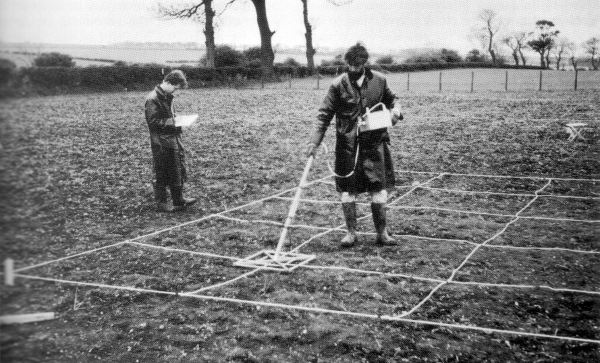
An interdisciplinary mobile research laboratory devoted to the use of free software and open hardware within the field of psychogeophysics. Field trips, working groups and occassional workshops are planned for 2010.
The first expedition, Topology of a Future City, took place in early February as part of Transmediale10. Further field trips are planned for London [August 2010], and Kiruna.
what is psychogeophysics?
Psychogeophysics as a novel field or discipline can be defined as crossing the wave and code distinction or barrier, encompassing disciplines of psychogeographics, data forensics and geophysical archaeology. It presents an interdisciplinary and highly speculative methodology investigating wider, complex signal ecologies through walks, discussions, working groups, measurement and quasi-scientific practice. Psychogeophysics equally offers a speculative take on future code (an uncovering of potentials in code as a new phase of software studies). The collision of psychogeographics with geophysics implies a collision between fiction (as software/code) and materiality, with geophysics defined as the quantitative observation of the earth's physical properties, with an emphasis on the magnetic field. Geophysics equally encompasses archaeological geophysics, with measurement of such properties allowing for the mapping of previous traces; an extension into detection and forensics.
The psychogeophysics project is heavily related to scrying, a hardware project for the development of modular, mobile, extremely low power, low budget platform combining radio and transmission technologies with computation. Scrying allows for the examination of a doubled city, an alternate electromagnetic architecture with lines of transmission, and of resonances undone from the intentionality implied by the political terms of receiver and transmitter. A further functional model is presented by alternative systems of message distribution such as the W.A.S.T.E. system elaborated within Thomas Pynchon's novel, The Crying Of Lot 49.
Date: 2010-05-27 01:00:47 BST
HTML generated by org-mode 6.31trans in emacs 23